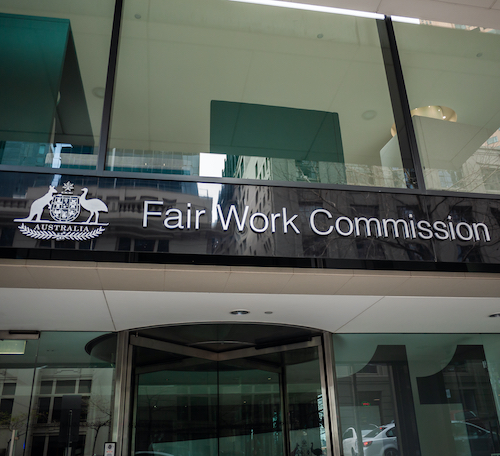
An employee's private chat about a colleague went beyond any "ordinary level of workplace gossip or venting", and was a "hateful" exchange that warranted her immediate dismissal, the Fair Work Commission has ruled.
"Ongoing" performance monitoring, along with a team leader's management style and a heavy workload, caused an employee's psychological injury, a commission has ruled in rejecting an employer's 'reasonable action' defence.
An employer has failed to prove that accommodating an injured employee's return to work would have caused it unjustifiable hardship, with the Federal Circuit Court ordering it to pay him $44k for discrimination.
An employer's generalised allegations about an employee's "inflammatory and abusive" workplace behaviour were not enough to support its decision to dismiss him, the Fair Work Commission has ruled.
An employer has been ordered to pay a manager $94k in damages after the Federal Circuit Court found it unlawfully dismissed him for complaining about the CEO's swearing.
An employee who engaged in a loud and public argument while wearing her work uniform may have caused her employer "some reputational harm", but not enough to warrant her immediate dismissal, the Fair Work Commission has ruled.
An employee's resignation was "a cry for assistance" after a traumatic incident at work, but her employer's response was "frankly, unhelpful" and bureaucratic, the Fair Work Commission has found.
In an important ruling analysing vicarious liability, the High Court has upheld an employer's appeal against a $432k damages award for an employee who suffered a psychological injury due to his co-worker's drunken misbehaviour.
Being under pressure and under-resourced did not "even remotely excuse" an employee's wilful and deliberate misconduct, the Fair Work Commission has found in rejecting his unfair dismissal application.
Despite "enthusiastic speculation" about flexible work agreements being the "future" of employment, their long-term feasibility is still unknown, and they are not yet an "inalienable" right, a commissioner has said in upholding the rejection of an employee's request.
All employers should consider putting in place a workplace s-xual harassment prevention plan, even though such plans are only expressly prescribed in one jurisdiction, according to a risk management expert.
Recent events have shone a spotlight on whistleblowing, placing employers firmly on notice that their response to a protected disclosure could be subject to intense scrutiny. Watch this webcast to understand the role HR plays in this challenging space.