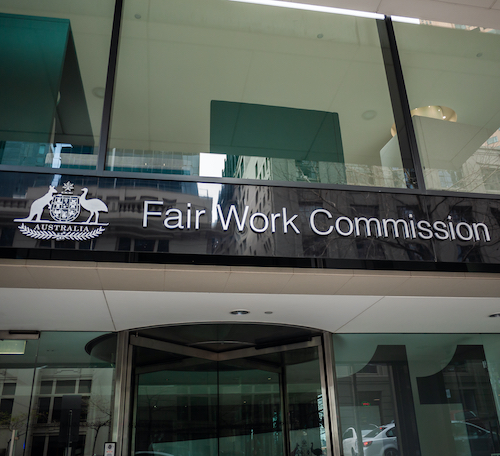
An employer was entitled to dismiss an employee who committed safety breaches to provoke a reaction from colleagues and then threw an "adult tantrum" when they called him out on it, the Fair Work Commission has found.
Two employees who breached their employment contracts by discussing a colleague's new salary have won maximum compensation for unfair dismissal, after the Fair Work Commission found their conduct was "not sufficiently serious".
Workplace investigations are subject to far greater scrutiny now, with employers under more pressure to make their processes fair, safe, and procedurally sound. Watch this webcast to ensure your organisation's approach is as thorough and defensible as possible.
S-xual harassment allegations against an employee were part of an employer's "pre-meditated" plan to remove him from its business "in the most efficient way", the Fair Work Commission has found.
An independent review into PwC Australia's practices has revealed an overly "collegial culture" and a disproportionate focus on revenue, leading to "shadow sides" of its culture, where aberrant behaviours went unchecked.
An employee has failed to prove that he was "performance managed out" of his job, with the Fair Work Commission finding his pattern of inappropriate conduct was a valid dismissal reason.
An employer has failed to prove it fairly sacked an employee for exposing a female colleague to explicit images, despite the Fair Work Commission accepting there was a "culture of inappropriate activity" among workers.
It was up to an employee, not his employer, to prove he acted in self-defence during a "violent" out-of-hours altercation, a Fair Work Commission full bench has ruled in overturning an unfair dismissal ruling.
An employee who misrepresented when she finished work on 17 occasions in a six-week period engaged in "time fraud" and was fairly sacked, the Fair Work Commission has ruled.
All employers should consider putting in place a workplace s-xual harassment prevention plan, even though such plans are only expressly prescribed in one jurisdiction, according to a risk management expert.
Recent events have shone a spotlight on whistleblowing, placing employers firmly on notice that their response to a protected disclosure could be subject to intense scrutiny. Watch this webcast to understand the role HR plays in this challenging space.