An employer should have provided more "positive support" to a worker after he was assaulted by his supervisor, a court has ruled in awarding him $148k in damages for a psychological injury.
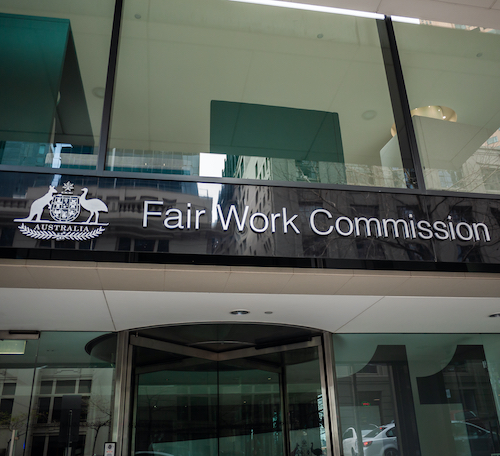
An employee's stress during a restructure was potentially exacerbated by some "miscommunication", but her redeployment was reasonable and didn't force her to resign, the Fair Work Commission has ruled.
A job applicant has failed to convince a tribunal that he wasn't hired because the women who interviewed him didn't "like men", while seeking a primary-school-style punishment for their alleged discrimination.
An employee sacked by a supervisor without authority was entitled to decline an HR manager's invitation to restore his employment, the Fair Work Commission has ruled in clearing him to pursue his adverse action claim.
The Fair Work Commission has been dealing with a raft of resignation disputes lately, and HR teams are "going to see a lot more of this", a lawyer warns.
An employer has failed to prove it took reasonable disciplinary action against an employee facing sexual harassment allegations, and that it wasn't liable for his resulting psychological injury.
An employee's successful discrimination claim is likely the start of a new body of case law that will consider how unconscious bias affects workplace decision-making, a lawyer warns.
Three months was a "reasonable" amount of time to wait and see if an employee recovered from a psychological injury so he could return to work, the Fair Work Commission has ruled in rejecting his unfair dismissal claim.
An employee who resigned because of a manager's "toxic" communication style has failed to prove this was her only option, despite the Fair Work Commission agreeing that it can be "very hard to tell a bully that they are a bully".
The Federal Court has increased an employee's damages for age discrimination from $20k to $90k, and added an order for economic loss, after finding he had suffered "considerable loss of amenity of life".
All employers should consider putting in place a workplace s-xual harassment prevention plan, even though such plans are only expressly prescribed in one jurisdiction, according to a risk management expert.
Recent events have shone a spotlight on whistleblowing, placing employers firmly on notice that their response to a protected disclosure could be subject to intense scrutiny. Watch this webcast to understand the role HR plays in this challenging space.