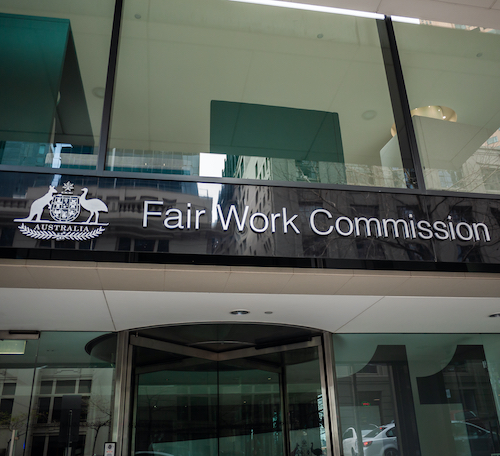
A "fundamentally unreasonable" misconduct investigation has revealed an employer's culture as "one where management protects itself by finding scapegoats to appease complaint or criticism", according to the Fair Work Commission.
It was unreasonable to revoke an employee's flexible work arrangements and then sack her because she took extended periods of leave, the Fair Work Commission has ruled in ordering her reinstatement.
A manager who produced an "offensive" and factually incorrect template letter when her employer enquired about her coronavirus vaccination status was unfairly sacked due to procedural deficiencies.
An employee has failed to prove he was unfairly sacked for his out-of-hours assault of a subordinate, with whom he was having an affair, after arguing it didn't impact his work performance.
An employer's s-xual harassment investigation focused on a complainant's "subjective reactions" and failed to fully consider the context of an incident, the Fair Work Commission has ruled in ordering reinstatement.
An employer's flawed approach to managing misbehaviour contributed to an employee's "defiant protestation and lack of cooperation", the Fair Work Commission has found in upholding his unfair dismissal claim.
An employee who set out to cause marital problems for his manager deserved to be sacked, but he was denied procedural fairness, the Fair Work Commission has ruled.
A procedurally unfair dismissal process didn't negate an employer's right to sack a worker over social media posts that mocked domestic violence, expressed racist sentiments, and vilified minority groups, the Fair Work Commission has ruled.
An employee who attributed his repeated lateness to a biological challenge (he wasn't a morning person), while his manager considered it a "pattern of wilful behaviour", has failed to prove his dismissal was unfair.
An employer "undertook a degree of crystal ball gazing" when it sacked a worker based on the view it was "only a matter of time" before his mouthy behaviour became "actual violence", the Fair Work Commission has ruled.
All employers should consider putting in place a workplace s-xual harassment prevention plan, even though such plans are only expressly prescribed in one jurisdiction, according to a risk management expert.
Recent events have shone a spotlight on whistleblowing, placing employers firmly on notice that their response to a protected disclosure could be subject to intense scrutiny. Watch this webcast to understand the role HR plays in this challenging space.