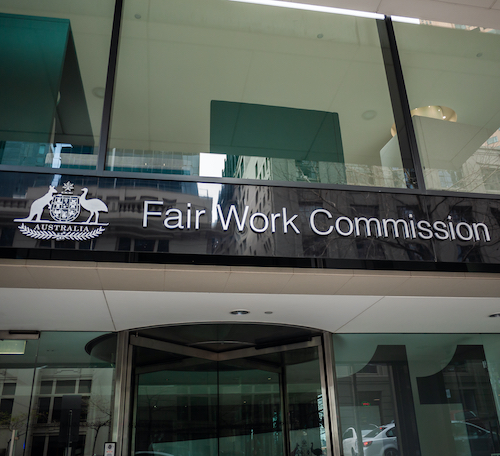
An employee who misrepresented when she finished work on 17 occasions in a six-week period engaged in "time fraud" and was fairly sacked, the Fair Work Commission has ruled.
An employer had a valid reason to dismiss an employee who failed to follow its lawful and reasonable directions to work in its office spaces, the Fair Work Commission has ruled.
An employer mischaracterised an employee's "carelessness" as serious misconduct, which further "coloured its judgement" about his lack of remorse, the Fair Work Commission has ruled in unfair dismissal proceedings.
An employer criticised for failing to undertake "even the most basic level of investigative analysis" has been ordered to reinstate an employee it sacked for misconduct.
Economic conditions are prompting more employers to examine their workforces and restructure strategically, but this requires extra caution in today's litigious landscape. Watch this webcast to ensure your organisation's decisions are legally sound and defensible.
An employee who was not given a reasonable opportunity to defend himself against "very serious" misconduct allegations has won maximum compensation for unfair dismissal.
Two managers treated an employee in a "high handed, hostile way", manifesting in an unfair disciplinary process, the Federal Court has found in upholding her adverse action claim.
An HR manager deliberately attempted to avoid paying an employee his correct entitlements by falsely accusing him of poor performance and then sacking him, a tribunal has ruled in fining an employer $104k.
An HR manager has been criticised for giving "poor" advice that an employee should be sacked for breaching an "inherent requirement" of his position description.
All employers should consider putting in place a workplace s-xual harassment prevention plan, even though such plans are only expressly prescribed in one jurisdiction, according to a risk management expert.
Recent events have shone a spotlight on whistleblowing, placing employers firmly on notice that their response to a protected disclosure could be subject to intense scrutiny. Watch this webcast to understand the role HR plays in this challenging space.