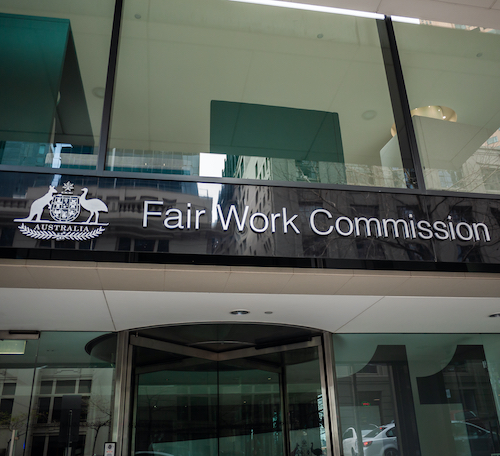
An employee's claims that she was "intimidated", "mobbed" and "coerced" at work were "unfounded and nonsensical" allegations designed to "pollute" her general protections claim with scandal, the Fair Work Commission has chided.
An employer's "perseverance" with a proposal to reduce an employee's hours due to health and safety concerns forced her to quit, the Fair Work Commission has ruled in awarding her $29k in compensation.
An employer's failure to suspend a manager "at any time" during a 10-month investigation into aggressive conduct allegations has undermined its decision to dismiss him.
The former CEO of Harrier Group was summarily dismissed for deliberately misusing her work credit card while the company was struggling financially, not because she raised bullying and pay issues, the Federal Circuit Court has ruled.
An employee's "severe error in judgement" in attending work while intoxicated outweighed his employer's "meaningful failure" to check on his welfare after sending him home, the Fair Work Commission has found.
A team leader who choked a colleague and threatened to kill another after they "provoked" him was fairly dismissed, the Fair Work Commission has ruled, rejecting that his actions were a "fight or flight" response and therefore justified.
An employer was entitled to dismiss an employee who committed safety breaches to provoke a reaction from colleagues and then threw an "adult tantrum" when they called him out on it, the Fair Work Commission has found.
An employer dismissed an employee when it changed her position from part time to casual without her agreement, the Fair Work Commission has found, clearing her to pursue her general protections claim.
An employer's "ad hoc" approach to a sexual harassment allegation and its subsequent investigation caused an employee's psychological injury and were not reasonable actions, a commission has found.
A talent advisory leader who signed contracts worth more than $2 million a year is suing her former employer for unlawful adverse action and contract breaches, alleging her complaints about its "toxic" culture were ignored.
All employers should consider putting in place a workplace s-xual harassment prevention plan, even though such plans are only expressly prescribed in one jurisdiction, according to a risk management expert.
Recent events have shone a spotlight on whistleblowing, placing employers firmly on notice that their response to a protected disclosure could be subject to intense scrutiny. Watch this webcast to understand the role HR plays in this challenging space.