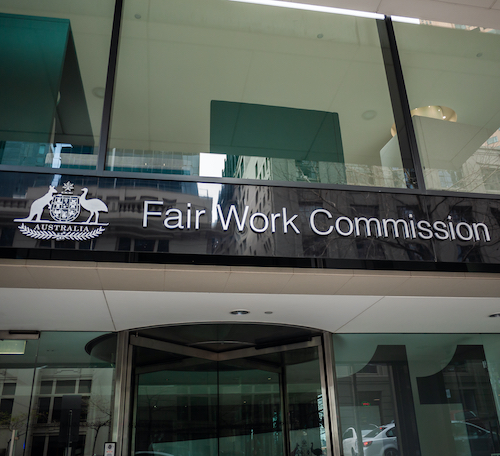
An employee has failed to prove on appeal that "severe mental symptoms" and ADHD made everyday life a "struggle", and that these were exceptional circumstances warranting a time extension to claim unfair dismissal.
An employee has successfully appealed a ruling that his out-of-hours misconduct warranted his dismissal, with a full Federal Court finding there was no proper consideration of procedural fairness matters.
An employer tried to accommodate a long-serving employee's health issues "as much as [it] could" before sacking her, but its process was deficient, the Fair Work Commission has found in awarding her compensation.
Workplace bullying complaints are escalating, against a backdrop of increasing stress, remote management and workplace tensions. Watch this webcast to ensure you're up to date on the latest developments and case law in this jurisdiction.
An employer has failed to prove it sacked a probationary employee for not disclosing her ADHD and Asperger's Syndrome prior to employment, with the Federal Circuit Court finding no evidence she had been dishonest.
An employee has failed to convince the Fair Work Commission that he didn't deserve to be dismissed because his numerous Facebook friend requests and unsolicited messages to a young female colleague were actually from his seven-year-old son.
An employer has failed to block an out-of-time unfair dismissal claim, after the Fair Work Commission found it had ignored a worker's numerous attempts to clarify his employment status.
An employee wasn't forced to resign when his employer decided to "freshen" up its roster, resulting in shifts that didn't work with his study commitments, the Fair Work Commission has ruled.
A casual worker who was refused further shifts and locked out of an employer's roster system after disclosing her pregnancy is entitled to pursue her general protections claim, the Fair Work Commission has ruled.
An employee who claimed he would "get exhausted" from working hard wasn't unfairly sacked for taking long breaks, with the Fair Work Commission finding his employer took a patient and "measured" approach to managing his poor performance.
All employers should consider putting in place a workplace s-xual harassment prevention plan, even though such plans are only expressly prescribed in one jurisdiction, according to a risk management expert.
Recent events have shone a spotlight on whistleblowing, placing employers firmly on notice that their response to a protected disclosure could be subject to intense scrutiny. Watch this webcast to understand the role HR plays in this challenging space.