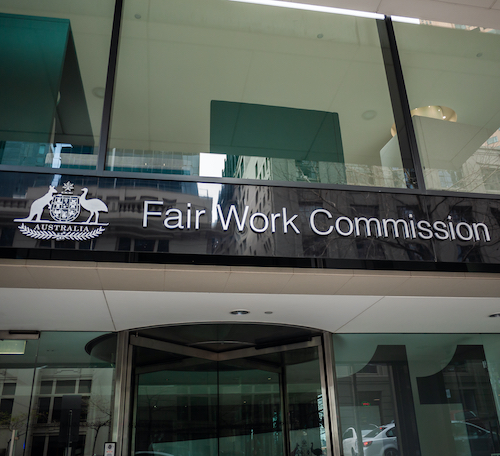
The Fair Work Commission has rejected that an employee's domestic violence disclosure to HR triggered an "exponential" increase in performance conversations that led to his constructive dismissal.
Dismissing a supervisor because she failed to include any "emotions" in her group texts was unfair, the Fair Work Commission has ruled in awarding her three months' compensation.
It was unfair of an employer not to follow through with its promise to discuss dismissal alternatives with a vaccine-hesitant worker, the Fair Work Commission has ruled.
The Fair Work Commission has rejected that an employee's poor attitude and failure to meet KPIs warranted dismissal, and ordered his reinstatement with continuity of service and backpay.
The risk that interview recordings from a misconduct investigation might end up on the internet has been deemed a "significant" consideration in weighing up an employee's access request.
An employer was entitled to reduce a supervisor's pay by nearly $20k after he "provided education" to subordinates about how to escape a sexual assault.
An employee's unblemished 32-year tenure didn't outweigh his failure to comply with "clear" directions following customer complaints about him sharing COVID conspiracy theories, the Fair Work Commission has ruled in upholding his dismissal.
The Fair Work Commission has backed a major employer's decision to "make a stand" against foul language at work, but has found its processes fell short when it disciplined a swearing employee.
An employee should have been given a "reality check" about his poor performance before he was dismissed, the Fair Work Commission has ruled in awarding him compensation.
All employers should consider putting in place a workplace s-xual harassment prevention plan, even though such plans are only expressly prescribed in one jurisdiction, according to a risk management expert.
Recent events have shone a spotlight on whistleblowing, placing employers firmly on notice that their response to a protected disclosure could be subject to intense scrutiny. Watch this webcast to understand the role HR plays in this challenging space.