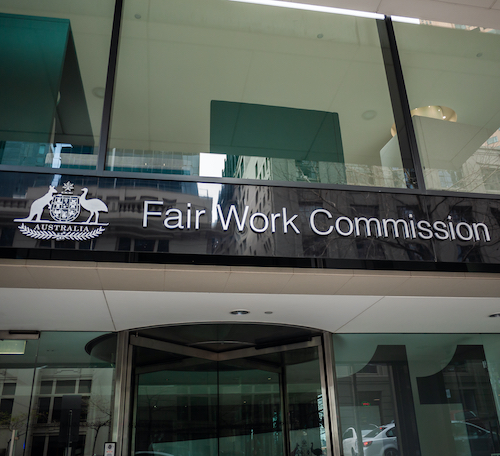
The Fair Work Commission has rejected that an employee kicked and pushed a colleague in a "fight or flight" reaction, finding her conduct warranted dismissal despite a flawed procedure.
An employee's intellectual freedom rights trumped his employer's code of conduct requirement to treat others with sensitivity, a full Federal Court has ruled in upholding his appeal.
The FWC has ordered reinstatement for an employee sacked for serious misconduct, after finding his unblemished safety record made dismissal a disproportionate response.
An employee who wouldn't disclose details of a suspected mental health condition has failed to prove she was unfairly sacked for failing to attend an independent medical exam.
An employee who was banned from a client's premises after he allegedly called one of its female employees a "c-nt" was fairly dismissed, the Fair Work Commission has found.
Substantiating a formal complaint against an employee who had no opportunity to respond was more than a "mere blemish" in a disciplinary process, a commission has ruled in upholding her psychological injury claim.
Two instances of unreasonable conduct by an HR leader and supervisor were "disparate" in nature and didn't constitute bullying, the Fair Work Commission has ruled.
All employers should consider putting in place a workplace s-xual harassment prevention plan, even though such plans are only expressly prescribed in one jurisdiction, according to a risk management expert.
Recent events have shone a spotlight on whistleblowing, placing employers firmly on notice that their response to a protected disclosure could be subject to intense scrutiny. Watch this webcast to understand the role HR plays in this challenging space.