Employees no longer need to tiptoe around pay discussions, under their new workplace right. Watch our short Q&A to understand these amendments and their practical implications.
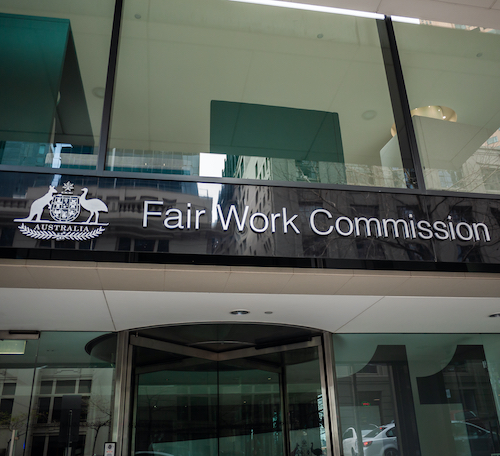
The Fair Work Commission has recommended a chief HR officer be referred to the police for knowingly providing false and misleading information to support an enterprise agreement's approval.
Employers have made zero progress in closing the gender pay gap over the past year, new research shows. Meanwhile the Fair Work Commission has set out the timeframes for when various elements of the new IR laws will come into effect.
The Fair Work Commission has clarified when various elements of the new IR laws will come into effect and what steps it has taken to prepare for their "significant impact".
An employer has been barred from sacking a worker who might "never" return to full duties, while the Fair Work Commission decides whether she has a right to ongoing reasonable adjustments.
A large employer's "enthusiasm" to sack an employee causing "considerable angst" at work resulted in a severely flawed process, the Fair Work Commission has ruled.
An employee has failed to prove that a workplace advisory service "threatened and coerced" her into settling her unfair dismissal claim on unfavourable terms.
"Clear shortfalls" in an employer's available staffing levels, which were "well in excess of typical absences", provided a reasonable business ground to refuse an employee's flexible work request, the Fair Work Commission has ruled.
A debate about how Australia can "future-proof" work relations has seen widespread agreement that reform is needed, but conflicting opinions about how "sweeping" it should be.
All employers should consider putting in place a workplace s-xual harassment prevention plan, even though such plans are only expressly prescribed in one jurisdiction, according to a risk management expert.
Recent events have shone a spotlight on whistleblowing, placing employers firmly on notice that their response to a protected disclosure could be subject to intense scrutiny. Watch this webcast to understand the role HR plays in this challenging space.