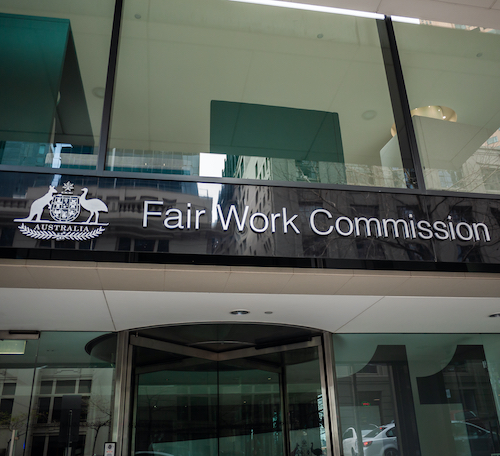
An employee who threatened to make a general protections claim if her employer didn't agree to her separation terms was not forced to resign, the Fair Work Commission has ruled.
Business representatives are lobbying hard ahead of the Federal Government's third tranche of employment law reforms to ensure professional contractors don't get caught up in provisions designed to protect casual workers.
Employers that erase employees' devices following terminations could be robbing themselves of valuable evidence in the event of an unfair dismissal claim, a lawyer says.
An employee who had asked to reduce her hours while she attempted to manage some personal issues was not dismissed when she was subsequently left off the employer's roster, the Fair Work Commission has found.
An employer has failed to block a sacked worker's reinstatement on the basis that his "proven track record of unacceptable workplace behaviour" made the employment relationship untenable.
Employers are now playing an increasingly active role in bargaining, with lawyers suggesting many are "getting ahead" of the multi-employer arrangements starting in June.
An employer has defended rejecting an employee's request to work from home one day a week, arguing it was "not sustainable" for colleagues to take on his duties when he wasn't there.
An employee who believed he could determine his own safe and appropriate way to work, regardless of his employer's policies or directives, has lost his adverse action claim.
All employers should consider putting in place a workplace s-xual harassment prevention plan, even though such plans are only expressly prescribed in one jurisdiction, according to a risk management expert.
Recent events have shone a spotlight on whistleblowing, placing employers firmly on notice that their response to a protected disclosure could be subject to intense scrutiny. Watch this webcast to understand the role HR plays in this challenging space.