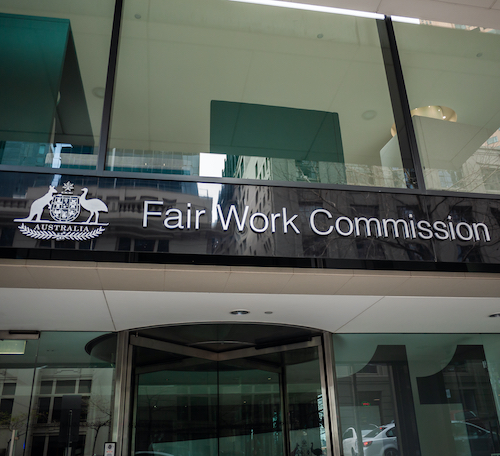
A manager's "performance discussion" with an employee was actually an "unsatisfactory exchange of views conducted in a cursory and excited manner", the Fair Work Commission has found in unfair dismissal proceedings.
An employee has failed to prove on appeal that his employer was vicariously liable for his co-worker's "extreme and unnecessary" behaviour towards him, which caused him to suffer post-traumatic stress disorder.
The Fair Work Commission has found a worker did not agree to end her employment and therefore was entitled to make a general protections claim, ruling her employer had grown intolerant of her "lack of obeisance" and sacked her.
Ahead of the Federal Government's next tranche of industrial relations legislation, an employer group has spoken out about the risk of redefining what constitutes a 'casual employee'.
An employee has failed to prove on appeal that "severe mental symptoms" and ADHD made everyday life a "struggle", and that these were exceptional circumstances warranting a time extension to claim unfair dismissal.
An employee who would "appear out of nowhere" and watch other staff, sometimes in the dark, has failed to prove his behaviour didn't warrant a 12-month remuneration reduction.
Ikea has turned an eight-week placement program into a permanent recruitment pillar, after achieving success on multiple levels with a pilot refugee workforce inclusion program.
Here you'll find links to all resources relevant to HR Daily's 'Workplace bullying – case law and risks update' webinar, presented on 28 June by Henry William Lawyers senior associate Renee Kasbarian.
An employer has been criticised for not dismissing an employee when it was a "viable option" and instead undertaking a "misguided" performance management process that contributed to a psychiatric injury.
All employers should consider putting in place a workplace s-xual harassment prevention plan, even though such plans are only expressly prescribed in one jurisdiction, according to a risk management expert.
Recent events have shone a spotlight on whistleblowing, placing employers firmly on notice that their response to a protected disclosure could be subject to intense scrutiny. Watch this webcast to understand the role HR plays in this challenging space.