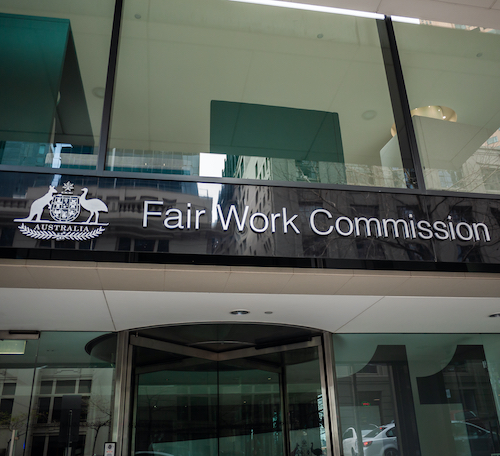
An employer had a valid reason to dismiss an employee who failed to follow its lawful and reasonable directions to work in its office spaces, the Fair Work Commission has ruled.
An employer had "no case to answer" regarding an employee's alleged work-from-home rights, but whether she was bullied after requesting flexibility remains to be determined, the Federal Circuit Court has ruled.
Despite "enthusiastic speculation" about flexible work agreements being the "future" of employment, their long-term feasibility is still unknown, and they are not yet an "inalienable" right, a commissioner has said in upholding the rejection of an employee's request.
An employee's "openly derisive" claim that her employer, in rejecting her flexible work request, confused its operational needs with its inability to manage its own workforce, was a "slap in the face", a commission has chastised.
Widespread adoption of a four-day week could drive some "perverse" wellbeing outcomes, warns a futurist who says the question is not "if" norms will change, but "when".
An employer's "blanket rule" not to tolerate violence in any circumstances was not "valid, fair, or practicable", the Fair Work Commission has ruled, in finding an employee was unfairly sacked after a physical altercation.
A remote worker has failed to prove her dismissal for having "low keystroke activity" over a three-month period was unfair, with the Fair Work Commission finding her failure to perform duties was not "minor" or "incidental".
All employers should consider putting in place a workplace s-xual harassment prevention plan, even though such plans are only expressly prescribed in one jurisdiction, according to a risk management expert.
Recent events have shone a spotlight on whistleblowing, placing employers firmly on notice that their response to a protected disclosure could be subject to intense scrutiny. Watch this webcast to understand the role HR plays in this challenging space.